20 July 87
TTA
GS 10
FTA
Games Masters
In the U ¥ area one may see a "Games Cube":
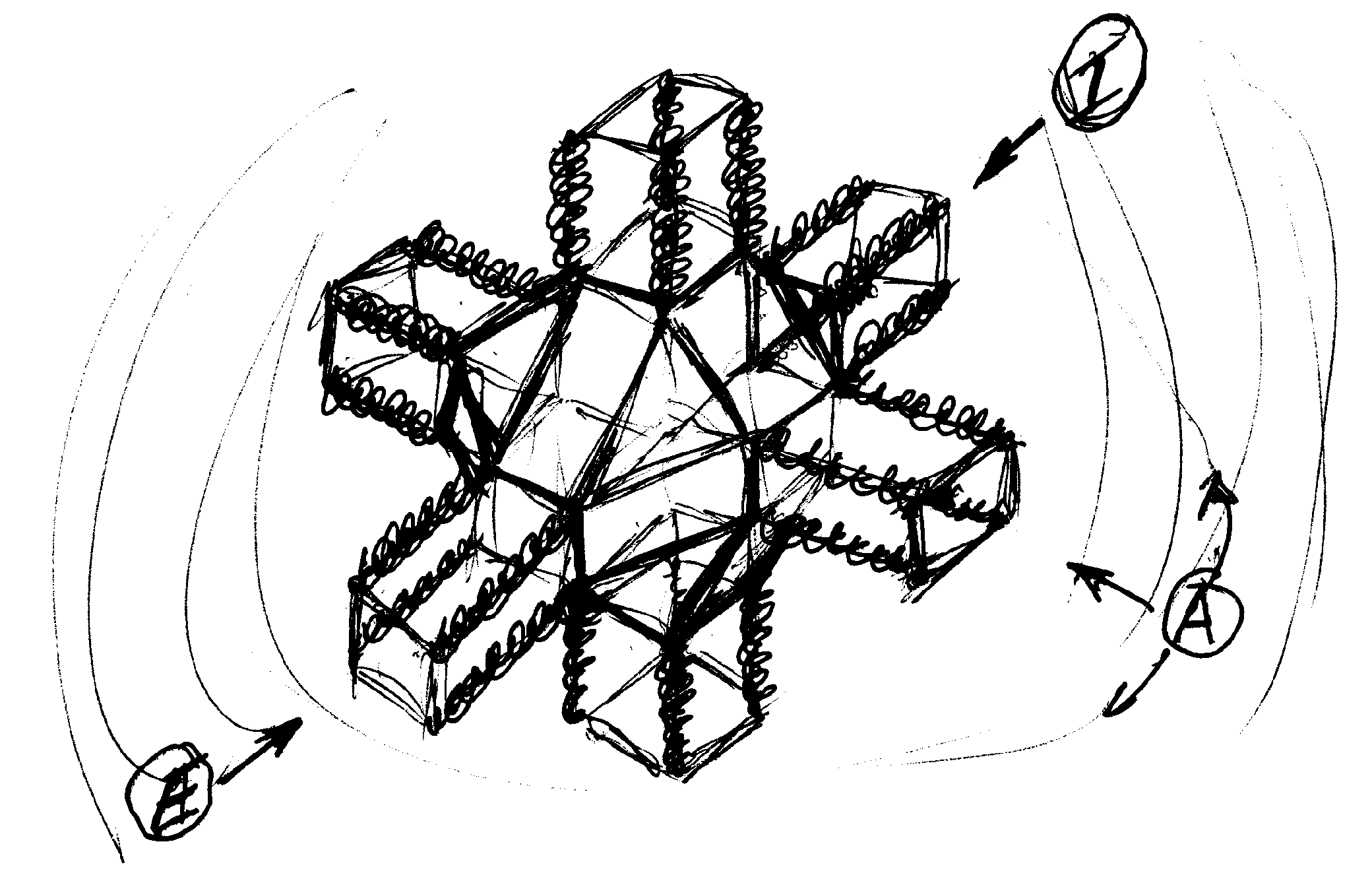
It appears to be something like this drawing. It is not solid, but golden and shimmering, transparent.
The "games cube" was very puzzling to me at first but it finally became known as to what it is for. I analyzed it many ways but finally it resolved (and as-ised) on the simple application of the Data Series.
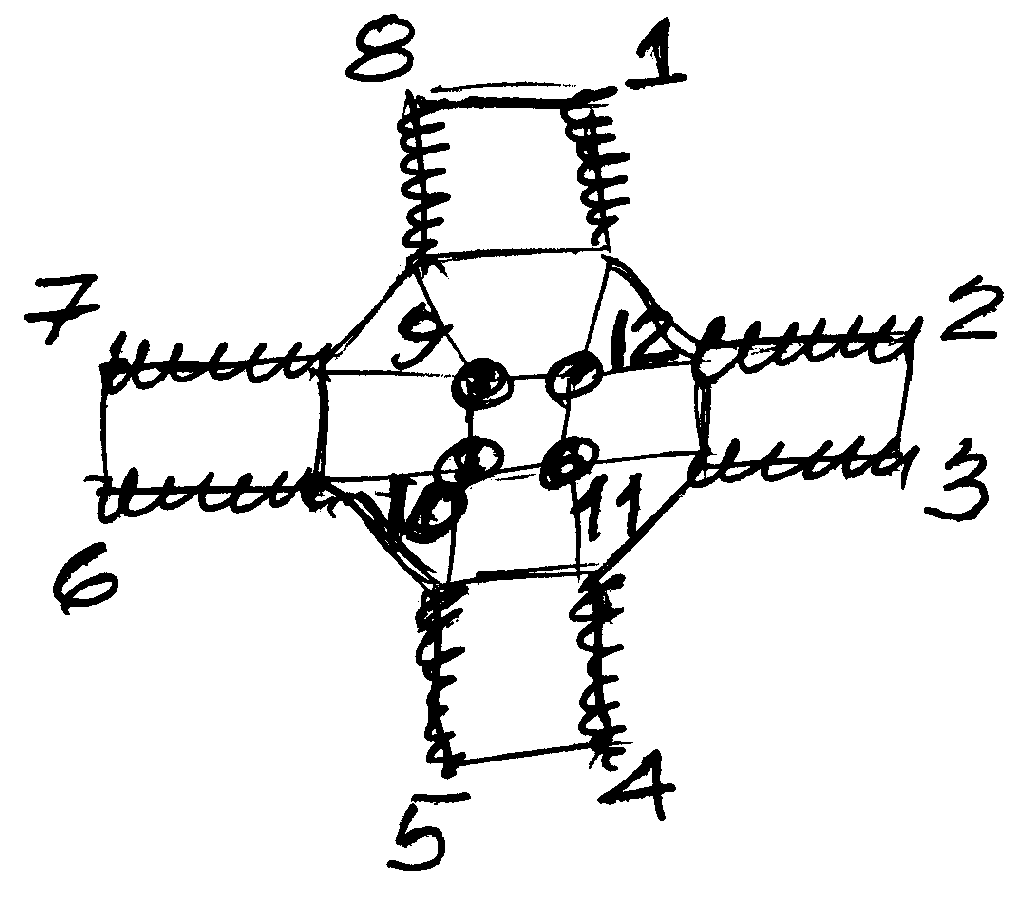
If one vies it from point "E", it looks like this:
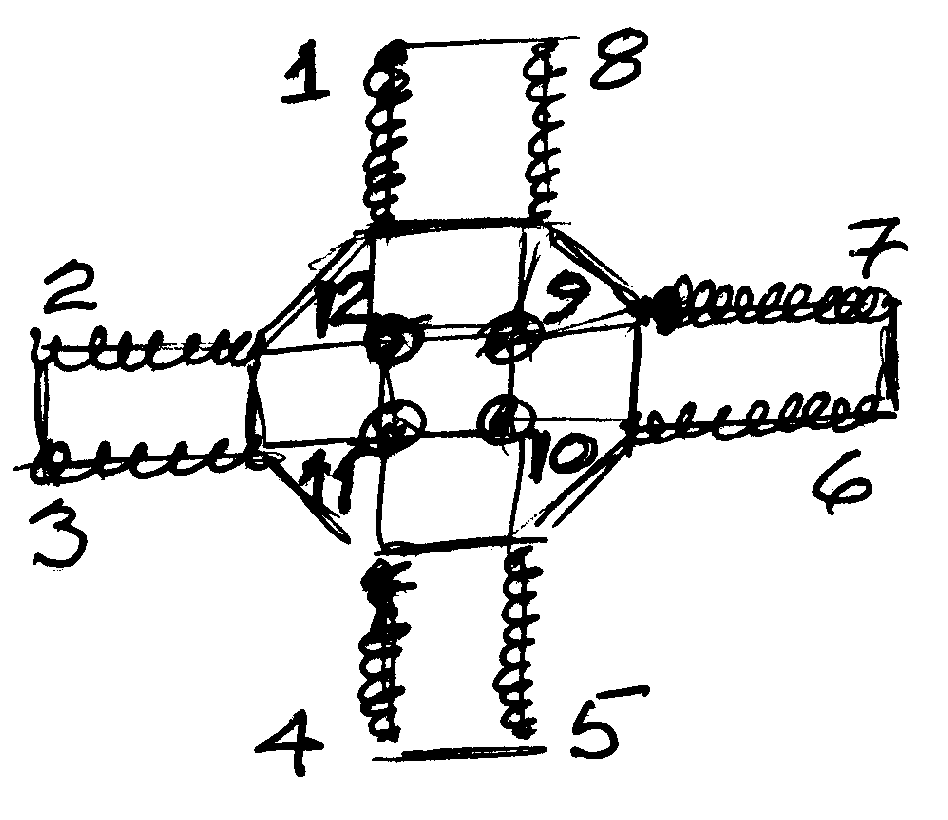 The "E" means "Existing Scene" and
the numbers are the 12 Static Dynamics.
The "E" means "Existing Scene" and
the numbers are the 12 Static Dynamics.
The lines with spirals on them ( ) each represents the 10x1040 times
around the "Perfect Circle" of Games Series. (Each loop of the Spiral is
one "Perfect Circle"!)
) each represents the 10x1040 times
around the "Perfect Circle" of Games Series. (Each loop of the Spiral is
one "Perfect Circle"!)
Just because these appear to be 12 of these Spirals viewed from point "E" and 12 from point "I" giving a total of 24, does not mean they are different games. They are all the same 10x1040 times around the same Perfect Circle of 24 Games Series. This game cube is merely to analyze the performance of the Static in relationship to each of the 12 numbered positions on the Games Cube - the 12 Dynamics of Static. Its like an ECHELON EVALUATION or analysis of the same thing from 12 different points of view. (Example: You could analyze your life from a 1st D viewpoint, then from a 2nd D viewpoint, 3rd D, etc.)
So now, what are the other 12 viewed from point "I"?
These are ideal Scenes of the games from the viewpoint of each of the 12 Dynamics.
It is a mirror image of the cube drawn on page 2 with all the dynamics corresponding.
 Viewed from point "I":
Now, when viewed from any point "A" between the EXISTING and IDEAL scene of the Games (and q or Static Dynamics), one can ANALYZE his performance by comparing the EXISTING to the IDEAL and get a RESULT (or WHY) to HANDLE and move his EXISTING SCENE toward the IDEAL SCENE. This results in IMPROVEMENT and better PLAYING of the GAME. (Also its more fun!)
From the point "A" or anywhere around the interface between the EXISTING & IDEAL scenes both EXISTING & IDEAL FORMS of Dynamics 9, 10, 11, 12 are visible, since they stick out to the "sides". These are the upper dynamics of AESTHETICS, ETHICS, TECH, and ADMINISTRATION of GAMES and constitute the Statics' BASICS to make any game better on any of Dynamics 1-8, which he may be analyzing. (He can improve in those areas too, as we know.)
A new Triangle appears from this analysis of the "Games Cube". Its the ANALYSIS - COMPARISONS - RESULTS action in the Static uses.
When the ABILITY to do one of those improves, the other two improve.
So, ability to analyze
ability to compare
ability to produce a result
all can raise the overall triangle and give IMPROVEMENT which is the highest purpose in the Games Series (see "Games Series Issue #3").
This is the underlying theory Ron used in giving us the "Data Series". It teaches one to do DATA ANALYSIS, COMPARE the EXISTING to the IDEAL SCENE, and PRODUCE RESULTS and BRING ABOUT an IMPROVEMENT in any situation.
The Data Series Evaluators Course is part of the "HAT" of a Games Master.
(Games End is covered on the next issue).
BR
Sr C/S Ron's